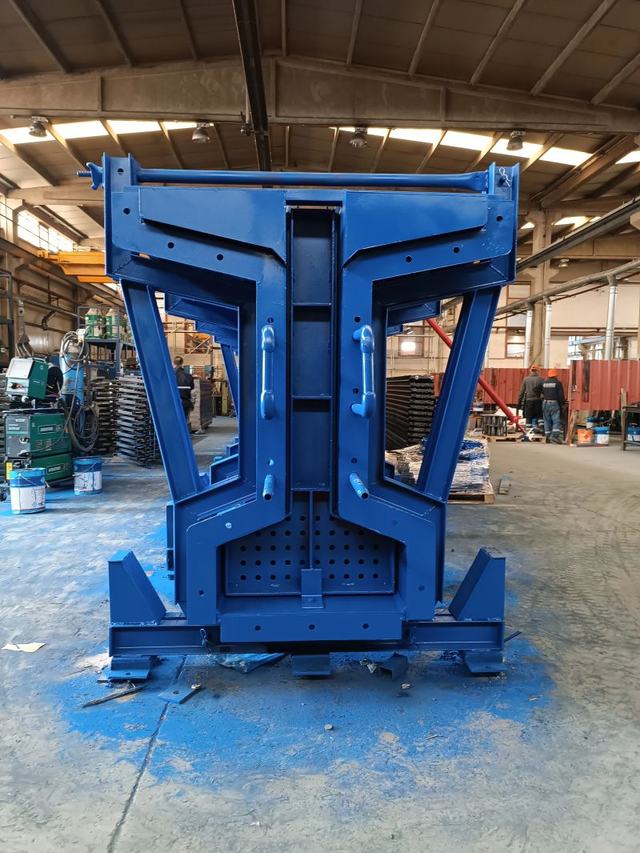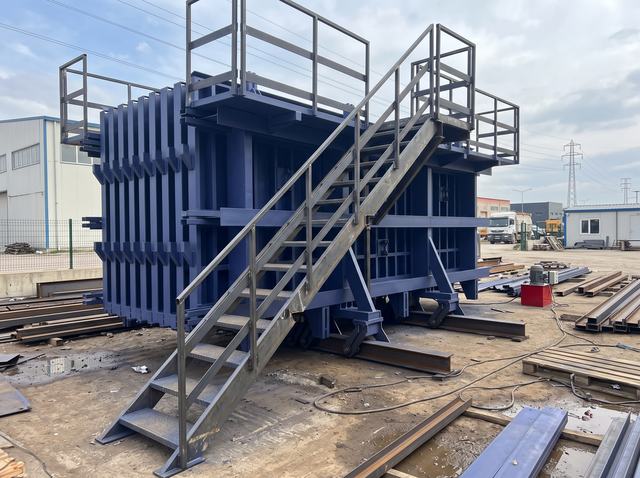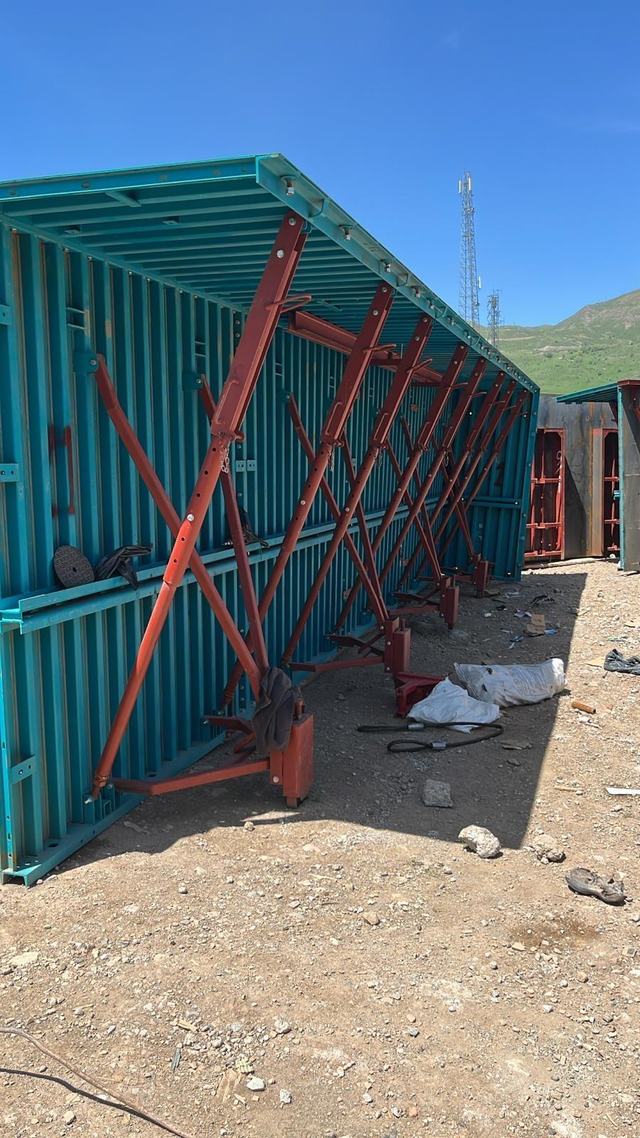

"What is the price per square metre of tunnel formwork?" has no single answer, because tunnel formwork is not a stock item. The same square metre can differ by a factor of two between projects. The items that make up the price are set out below.
1. Steel tonnage
The largest cost item. Tonnage is determined not by preference but by calculation:
- Fresh concrete pressure — derived from pour rate and concrete temperature to DIN 18218; panel plate and stiffening profiles follow from it
- Slab thickness — the vertical load the deck must carry
- Storey height and room width — sections grow with the span
A "price per square metre" given without that calculation is either unsafe or unnecessarily heavy. A heavy form is not only expensive; it also strains crane capacity.
2. Panel plate thickness and surface requirement
Where exposed concrete is required, panel flatness is held tighter, joints are reduced and post-weld straightening labour increases. A structure that will be rendered does not need the same tolerance. The surface requirement affects price directly and is often left unstated in quotations — ask about it.
3. Mechanism and equipment
The same form body is priced very differently depending on its equipment:
| Equipment | Effect |
|---|---|
| Screw jacks | Economical, slow |
| Hydraulic unit | Fast cycle, higher cost |
| Wheeled carriage | Reduces crane demand |
| Working platform and handrail | Required for safety, adds tonnage |
| External scaffold | For façade work |
4. Surface treatment
Sandblasting, epoxy primer and industrial top coat are standard. In coastal or aggressive environments the coating system changes and cost rises.
5. Engineering and modelling
Design, three-dimensional modelling and structural calculation are part of the price. Cutting this item does not save money: a form that was never modelled does not fit on site, and adapting it can cost more than the form itself.
6. Number of repetitions
Will the form cast 200 times or 2,000? For high repetition, wear faces are thickened and hinges and latches are chosen to be serviceable. That makes the form more expensive but lowers cost per cycle. The right measure of comparison is not the purchase price but the cost per cycle.
7. Quantity and delivery time
Unit cost falls as the number of sets produced together increases. A tight delivery date means overtime and priority scheduling, and pushes the price up.
What to ask when requesting a quotation
To obtain comparable quotations, ask every supplier the same questions:
- Which pour rate and concrete temperature was it calculated for?
- What is the panel plate thickness and stiffener spacing?
- What is the tie spacing, and how many rows?
- What is the total steel tonnage?
- Which coating system, and how many microns?
- Are jacks, carriage, platform and handrail included in the price?
- Is site assembly and first erection support provided?
- How is a revision priced if one becomes necessary?
The difference between two quotations is usually not that "one is cheaper" but that the two do not describe the same formwork.
A common mistake: cutting tonnage
The most frequent error is offering the same geometry in thinner plate. The form looks cheap at first; what follows is:
- Panels bulge in the first pours and the concrete face shows waves
- The form is stripped for correction and work stops
- Stiffening is welded on afterwards, and surface quality never returns to its original state
The money saved is gone within the first month.
In short
The price of tunnel formwork is the sum of steel tonnage, mechanism, surface requirement and engineering. The right approach is not to ask a supplier for a "price per square metre" but to give the project dimensions and ask for a calculated configuration. Send us your dimensions and cycle requirements and we will work out a suitable form, with its tonnage.
PRODUCT GROUPS IN THIS ARTICLE
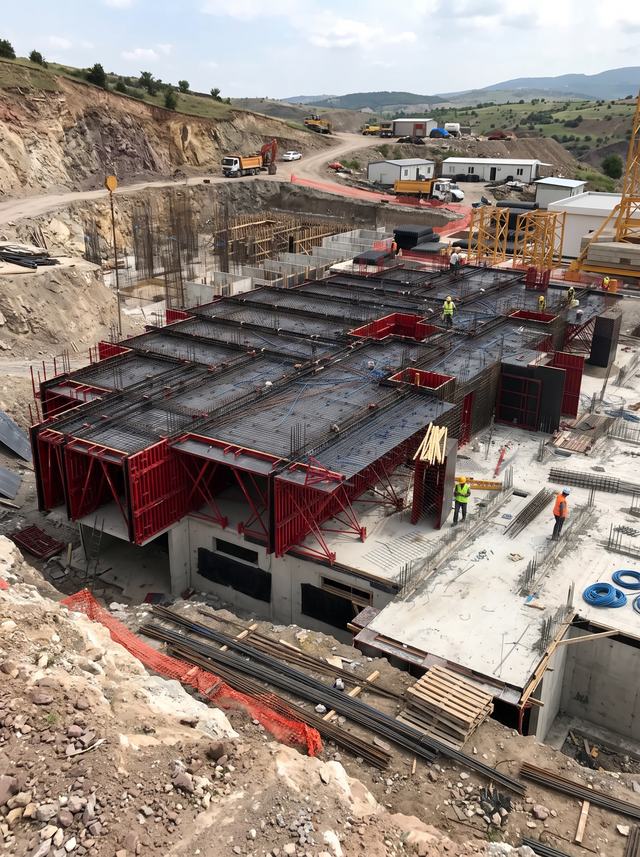
BUILDING TUNNEL FORMWORK
Half-tunnel steel formwork casting load-bearing walls and the slab in a single operation.
VIEW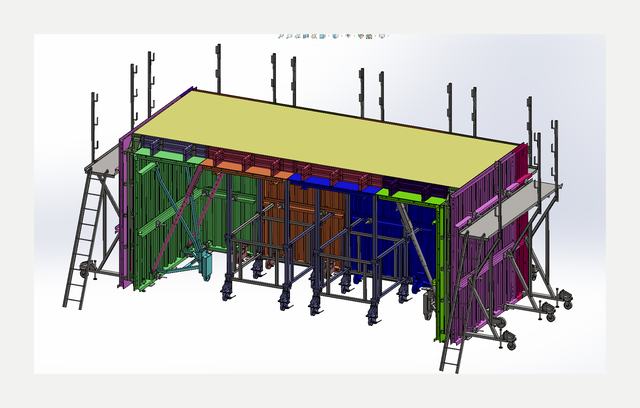
TUNNEL TYPE VILLA FORMWORK
A wheeled, adjustable tunnel system casting wall and slab in one operation for villas and terraced housing.
VIEW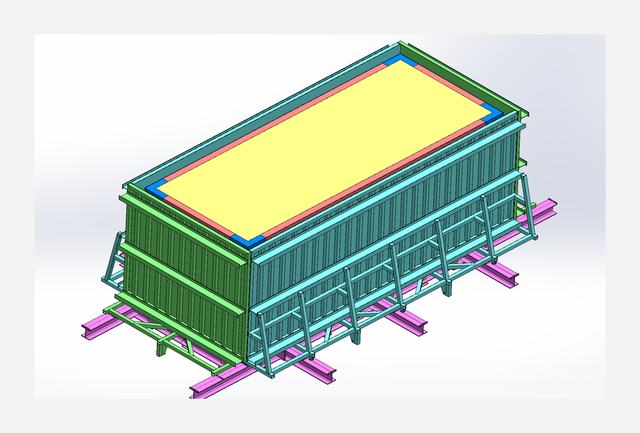
PAVILION TYPE VILLA FORMWORK
A rail-mounted closed box mould casting all four walls and the roof slab of a single-volume pavilion or villa in one operation.
VIEWLet us work out the right formwork configuration for your project.
REQUEST A QUOTE