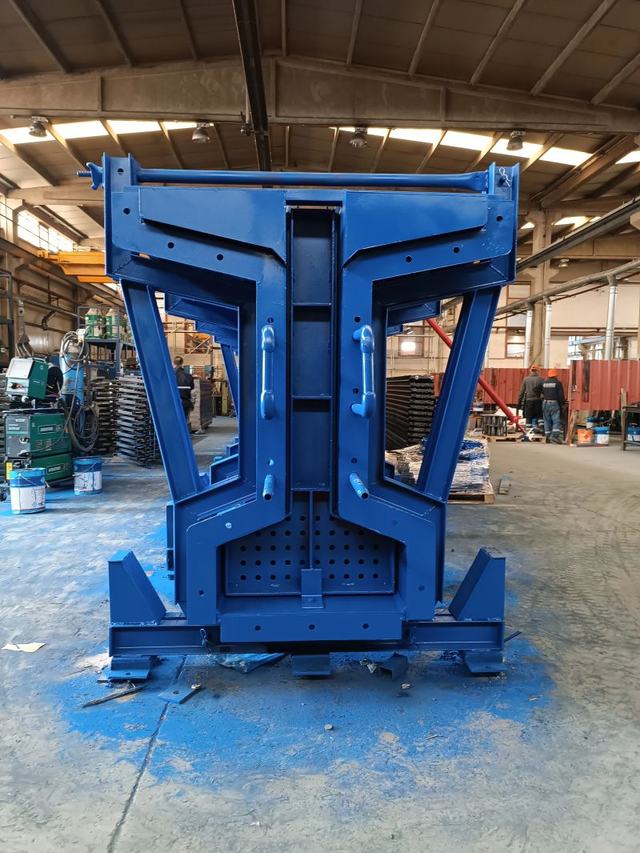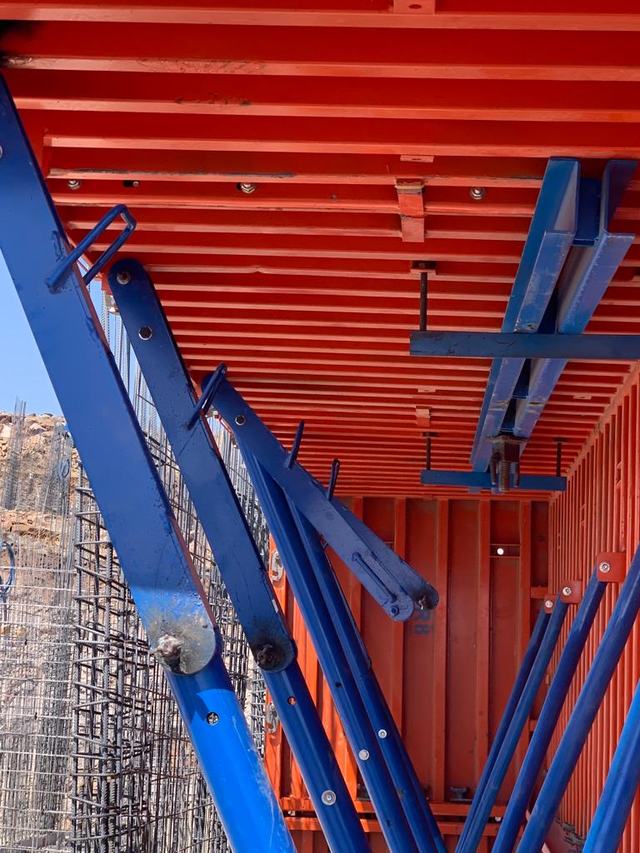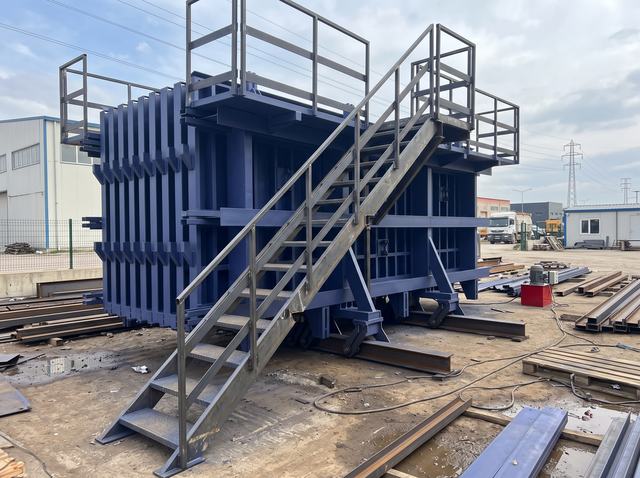

On a housing project the formwork decision sets one of the largest lines in the cost table. The question is usually this: tunnel formwork or panel formwork (conventional steel/aluminium)? The answer lies in the number of repetitions and in the layout.
The basic difference
With panel formwork, wall and slab are separate operations: the wall is cast, left to cure, then the slab formwork is erected and cast. With tunnel formwork the two are a single pour. That one sentence is the source of every difference below.
Decision table
| Tunnel formwork | Panel formwork | |
|---|---|---|
| Storey cycle | 1–2 days | 5–10 days |
| Pours per storey | 1 | 2 (wall + slab) |
| Labour | Small, trained crew | Large number of formworkers |
| Crane | Mandatory, high capacity | Small crane is enough |
| Initial investment | High | Moderate |
| Layout flexibility | Low — the plan must repeat | High — every floor can differ |
| Surface quality | Exposed concrete, no render needed | Joints visible, usually rendered |
| Economic threshold | ~100+ repetitions | Any scale |
| Stripping risk | Controlled, form stays as one unit | Piece by piece, higher fall risk |
| Site area | Needs manoeuvring space for the form | More flexible |
Which project calls for which
Choose tunnel formwork when:
- The same floor plan repeats at least 60–100 times (multi-block housing estates, social housing projects)
- The delivery period is short and structural speed is decisive
- There is a tower crane of adequate capacity on site
- Exposed concrete is acceptable (saving on render and plaster labour)
Choose panel formwork when:
- There are few blocks and the layout changes on every floor
- Crane capacity is limited, or there is no crane
- The work involves complex geometry (asymmetric walls, stepped levels)
- The investment budget cannot allocate a large share to formwork
Where the cost actually moves
Tunnel formwork increases the formwork line and reduces the labour and time lines. Comparing on formwork price alone is misleading; the same table has to include:
- Formworker man-days
- The financing cost of the structural programme (interest, lost rent)
- Render and plaster labour, which falls substantially with tunnel formwork
- Crane hire or depreciation
- The residual value of the formwork at the end of the project — tunnel forms are reused on the next job
On high-repetition projects the increase in the formwork line is offset by the reduction in time and labour, and the net result is usually favourable. With few repetitions it is the other way round.
The hybrid solution
In practice the most common third route is mixed use: typical floors are cast with tunnel formwork, while ground floor commercial areas, the roof level and asymmetric sections are cast with panel formwork. This covers the flexibility weakness of tunnel formwork. If a hybrid approach is planned, the interface detail with panel formwork must be considered while the tunnel set is being designed; improvised joints added later leave marks on the surface.
The structural side
A structure built with tunnel formwork is a wall-slab bearing system: no columns or beams, with high lateral stiffness. Panel formwork can build either a frame or a shear wall system. So the choice is not only a construction method but a structural system decision — it has to be taken together with the structural design. Formwork is not a detail chosen afterwards.
What we need to decide
When working out a formwork configuration for a project we ask for:
- Typical floor plan, number of storeys and number of blocks
- Wall thicknesses and storey height
- Slab thickness
- Crane make/capacity on site, or the planned crane
- Target storey cycle in days
- Concrete class, consistency and casting season
With those six items we can show, with figures, which system is economical.
In short
Tunnel formwork brings speed and surface quality; panel formwork brings flexibility and a lower entry cost. The threshold is the number of repetitions. In high-repetition housing production tunnel formwork almost always comes out ahead; for one-off work with variable layouts, panel formwork is the right call.
PRODUCT GROUPS IN THIS ARTICLE
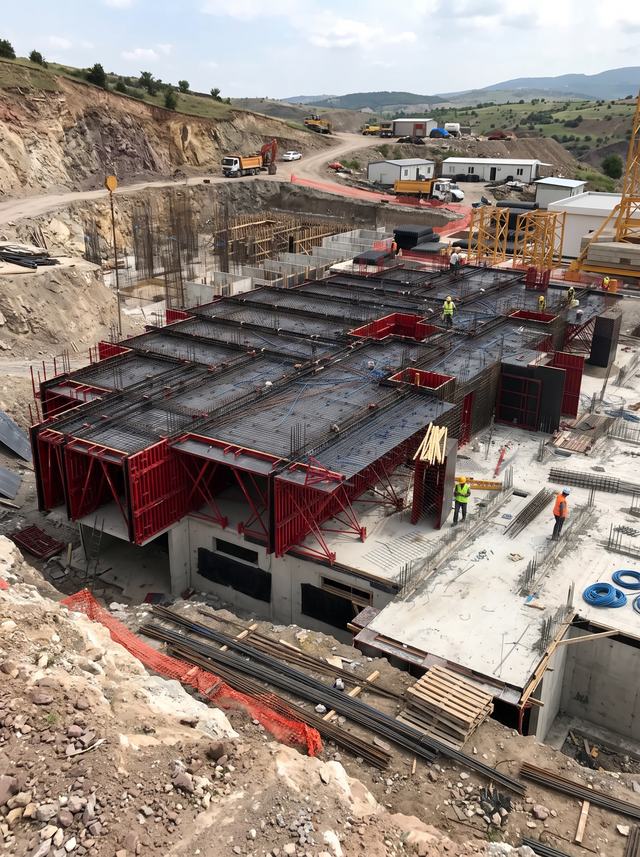
BUILDING TUNNEL FORMWORK
Half-tunnel steel formwork casting load-bearing walls and the slab in a single operation.
VIEW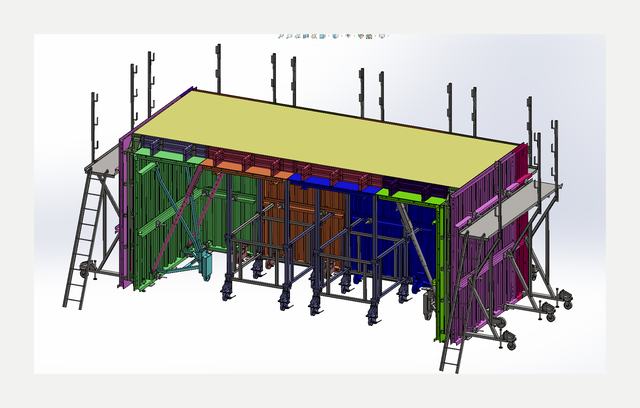
TUNNEL TYPE VILLA FORMWORK
A wheeled, adjustable tunnel system casting wall and slab in one operation for villas and terraced housing.
VIEW SHEAR PANEL MOULDSHEAR PANEL MOULD
Production mould for load-bearing and partition precast shear panels.
VIEWLet us work out the right formwork configuration for your project.
REQUEST A QUOTE